Queer Places:
Robert Louis Stevenson Museum, 46MM+9Q2, Cross Island Rd, Apia, Samoa
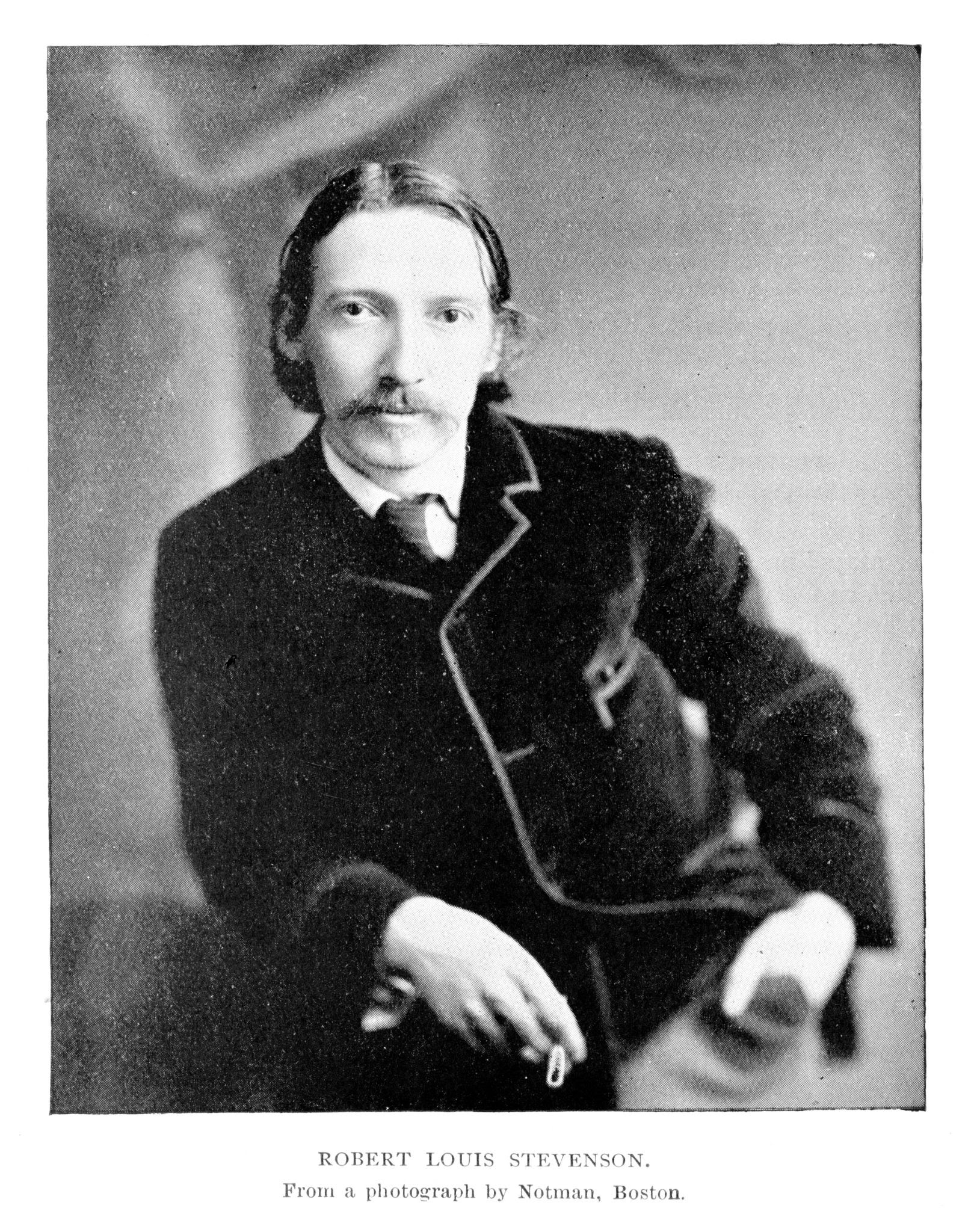 Robert Louis Stevenson (November 13, 1850 – December 3, 1894) was a Scottish novelist, poet, and travel writer whose vivid imagination gave the world Treasure Island,
Kidnapped, and Strange Case of Dr Jekyll and Mr Hyde. Though he lived a conventional heterosexual life in terms of marriage, Stevenson’s work, social circle, and cultural
legacy have deep, celebrated connections to late-Victorian LGBTQ history and queer literary scholarship.
Robert Louis Stevenson (November 13, 1850 – December 3, 1894) was a Scottish novelist, poet, and travel writer whose vivid imagination gave the world Treasure Island,
Kidnapped, and Strange Case of Dr Jekyll and Mr Hyde. Though he lived a conventional heterosexual life in terms of marriage, Stevenson’s work, social circle, and cultural
legacy have deep, celebrated connections to late-Victorian LGBTQ history and queer literary scholarship.
Born in Edinburgh to a distinguished family of lighthouse engineers, he was plagued by chronic respiratory illness throughout his life. He studied engineering and law at
Edinburgh University before pursuing writing full-time.
In 1870s he adopted an eccentric, velvet-jacketed bohemian lifestyle, clashing with his conservative Presbyterian parents over religious beliefs and social norms.
In France, he fell in love with Fanny Vandegrift Osbourne, an American divorcee 10 years his senior. They married in 1880. Despite persistent hemorrhaging and lung
disease, Stevenson traveled relentlessly in search of health.
In 1889 he settled in Vailima, Samoa, where locals dubbed him Tusitala ("Teller of Tales"). He died suddenly of a cerebral hemorrhage in 1894 at age 44.
While Stevenson himself identified as heterosexual and maintained a marriage with Fanny Osbourne, his life and writing sit squarely at the center of late-Victorian queer
studies for three major reasons:
Stevenson moved in bohemian circles alongside prominent gay and bisexual figures of the fin de siècle:
John Addington Symonds was one of Victorian Britain's earliest open defenders of homosexuality (then termed
"inversion"). Symonds was a close friend of Stevenson. When Stevenson published Jekyll and Hyde, Symonds wrote back in awe, noting that as a covert homosexual in Victorian
England, the story's allegory of a suppressed, split life "touches one too closely".
Stevenson maintained deep, affectionate bonds with both Edmund Gosse & Horatio Brown,
who were key figures in early queer literary history.
The acclaimed portraitist John Singer Sargent—himself a queer figure—painted Stevenson multiple times, including the
famous Robert Louis Stevenson and His Wife (1885), which scholars frequently analyze for its subversive depiction of domesticity and marital tension.
Published in 1886—just one year after Britain passed the Labouchere Amendment (the law criminalizing "gross indecency" between men that was later used to
convict Oscar Wilde)—Strange Case of Dr. Jekyll and Mr. Hyde is widely read by queer theorists as a primary text on the Victorian
"double life":
The story revolves entirely around a bachelor network of respectable London men—lawyers, doctors, and gentlemen like Mr. Utterson—who fiercely guard each other’s secrets
from public scrutiny.
Throughout the novella, character suspicions around Jekyll’s connection to Hyde center on blackmail—a pervasive concern for gay men in 19th-century Britain who were
forced to conceal private desires under threat of ruin.
The physical layout of Jekyll's home (a respectable facade with a shady, neglected back door used by Hyde) is frequently analyzed as an architectural metaphor for hidden
queer subcultures in Victorian urban life.
Stevenson’s early aesthetic dress, expressive grooming, and rejection of industrial Scotch work ethics led contemporary critics to note his "gay" or flamboyant affect.
Many of Stevenson’s works, including Treasure Island and Kidnapped, explore intense homosocial bonds—deep emotional loyalties between male characters outside traditional
family structures.
Through his intimate circle of gay friends, his subversion of Victorian respectability, and his masterpieces on hidden identity, Stevenson created narratives that
resonated deeply with the queer experience of his era and remain central to LGBTQ literary criticism today.
References:
Other references:
- Gayday by Massimo Consoli, 2005
- McLynn, Frank. Robert Louis Stevenson: A Biography. Vintage, 1994
- Rankin, Nicholas. Dead Man's Chest: Travels after Robert Louis Stevenson. Faber & Faber, 1987
- Symonds, John Addington. The Letters of John Addington Symonds. Edited by Herbert M. Schueller and Robert L. Peters, Wayne State University Press, 1969
- Stevenson, Robert Louis. The Letters of Robert Louis Stevenson. Edited by Bradford A. Booth and Ernest Mehew, Yale University Press, 1994–1995 (8 vols)
- Showalter, Elaine. Sexual Anarchy: Gender and Culture at the Fin de Siècle. Viking, 1990
- Sinfield, Alan. The Wilde Century: Effeminacy, Oscar Wilde and the Queer Moment. Columbia University Press, 1994
- Davidson, Guy. Queer Urbanisms in Fin-de-Siècle Gothic Fiction. Palgrave Macmillan, 2017
- Journal of Stevenson Studies (Edinburgh Napier University)
- The RLS Website Archive (robert-louis-stevenson.org)
Support this project
This website is a passion project researched, developed, and funded entirely by me. If you find the content valuable and would like to help support the ongoing research and hosting costs, any contribution is deeply appreciated.
Thank you for keeping this independent resource alive!
My books on Amazon: Elisa Rolle's books
BACK TO HOME PAGE